
Logistics and manufacturing
When the system says one thing and the shelf says another.
From the order that starts it to the goods that leave the building, and everything the warehouse does in between.
Built so that what was sold, what was built and what shipped turn out to be the same thing.

Your entire flow, covered
Everything between the moment a demand appears and the moment the goods leave the building, including the parts nobody enjoys doing.
The demand
An order from a customer, a forecast, or a minimum level reached on a shelf. Whatever starts the chain is recorded once, with a date somebody can commit to.
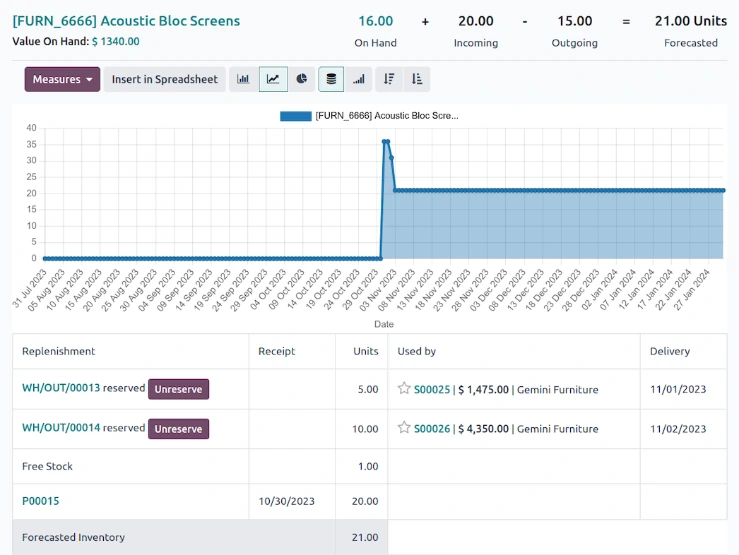
What to buy and what to make
What is already on hand, what is already on order and what is missing are worked out for you. You still decide.
Purchasing
Orders to suppliers with their own approval steps and their own lead times. What was promised and what actually arrives are both kept.
Goods in
Reception checked against the order, with the differences shown rather than smoothed over. Batch and serial numbers captured at the moment they are known.
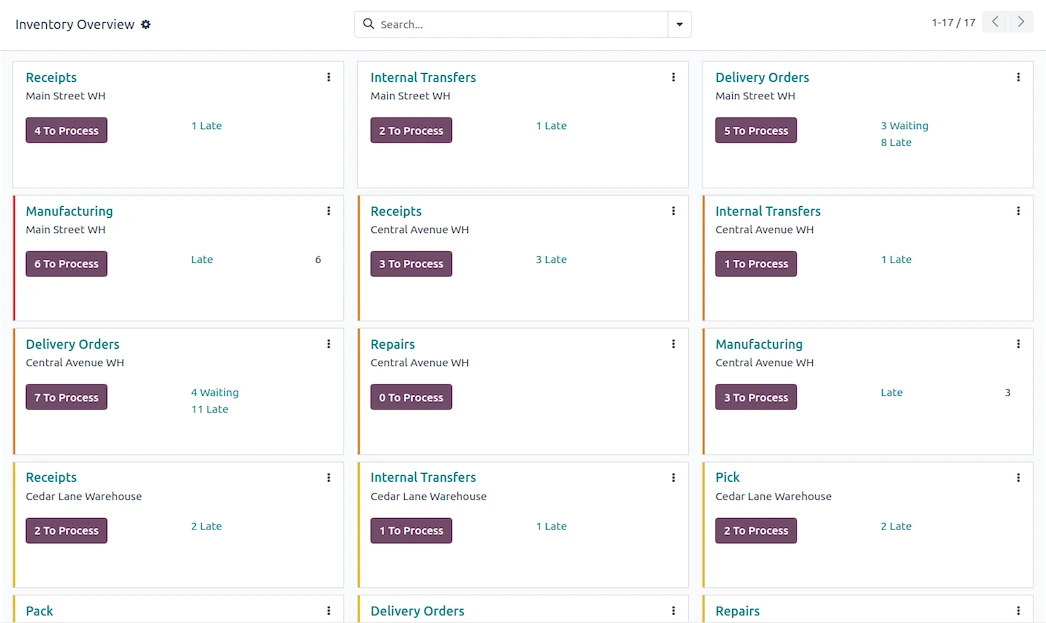
The stock itself
Locations, batches, expiry dates and reservations. What the system says is what sits on the shelf, because the count and the movement are the same event.
Production
Work orders that carry their components and their operations, so the workshop builds what was actually needed rather than the nearest thing to it.
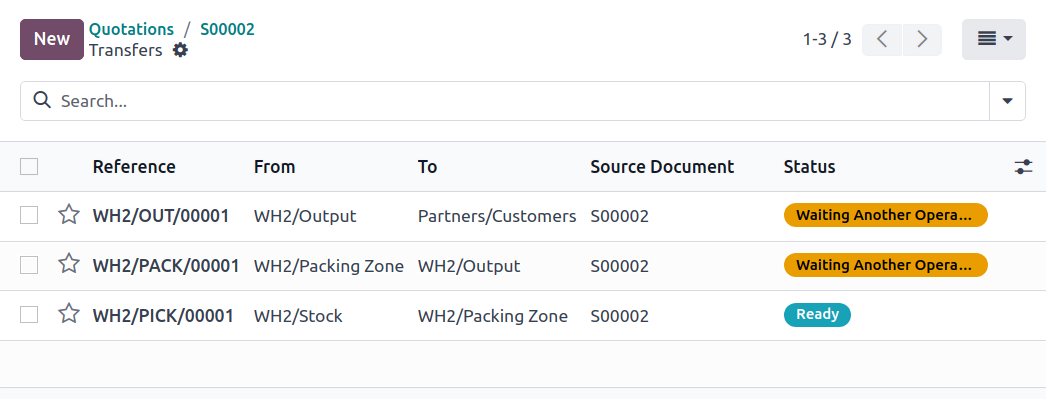
Picking, packing and dispatch
Preparation in the order the warehouse actually walks, packing that matches the delivery note, and a carrier label produced from the same data.
Stock value and the figures that follow
Every movement carries its value. What leaves the warehouse becomes a cost, and accounting sees it without anyone entering it a second time.
What we brought to it ourselves
Much of the chain above is configuration. These are ours, built because clients needed them and the standard stopped short.
Movements that carry the right date
Taking over data, a late entry, a period being closed: sometimes a movement belongs to yesterday. Transfers, inventory adjustments and production orders can be dated when they happened rather than when they were typed.
Products filed in more than one way
A single category rarely matches how a company thinks about its range. An item carries several labels at once, so it can be found by material, by market and by family.
A portal professional customers can use
A buyer with four hundred orders needs to filter, not to scroll. And a professional buyer often prepares several orders at once, one per site or per department, so the online shop lets them run more than one at a time.
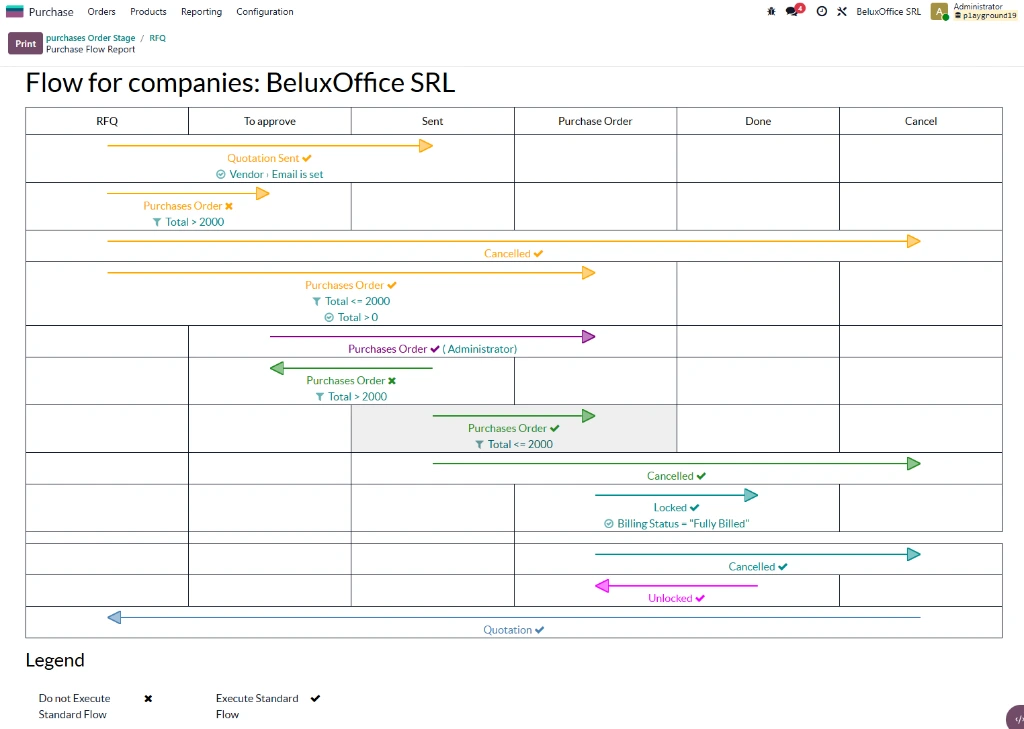
Your process is already defined. The system can follow it.
Your sales and purchase processes are already defined. To be priced, awaiting a site visit, awaiting a deposit, released to production: those steps exist, they just do not look like draft, then sent, then order.
You configure the flow the way the work actually runs. Underneath, the standard states keep moving as they should, so reports and automations stay coherent.
Sales and purchases alike.
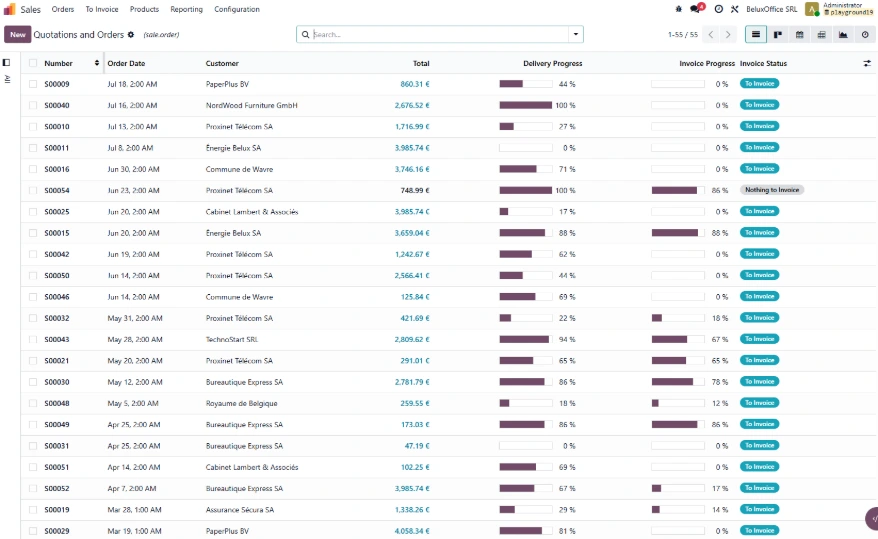
Delivered is a yes or no. You need a number.
The system tells you whether an order is delivered and invoiced. It does not tell you how far. On a partly delivered order, answering where are we on this one means opening the lines and adding up.
Here the share delivered and the share invoiced sit on the order itself, in quantity and in value.
It does not stop at the loading bay
What the warehouse moves ends up in the accounts, and what the workshop builds started as a price somebody quoted. That is why we work on those too.
Finance and accounting
Movements valued correctly, posted once, and provable when somebody asks how a figure was arrived at.
Finance and accounting
Made-to-measure products
Prices and components worked out by the system, so the workshop receives what was actually sold.
Made-to-measure products
Tell us where your stock and your system disagree
Describe what your team does by hand between the order and the loading bay, and what you would like it to stop doing. We will tell you what Odoo handles as it comes, what needs configuring, and the few things that genuinely need building.