
Interventions
A pothole reported on Monday, a lift out of service on Tuesday, a bench to replace before the school holidays.
Every request recorded in one place, sent to the right service, assigned, carried out and closed, with the hours and materials it consumed.
The person taking the call does not have to know who handles it.

Requests arrive from everywhere
By phone, by email, on a paper slip, in a corridor conversation. Routed by whoever happens to know which service does what, then followed in a personal spreadsheet by each service head.
With no reliable answer to the three questions that matter: how many are open, which ones are late, and what all of it cost.
The flow
From the call to the closure, and what stays behind afterwards.
It arrives
Whoever takes the call describes the problem and names the place concerned. They do not need to know which service will handle it.
It is filed under a subject
Public space, then road surface, then pothole. Three levels, because that is what a classification of municipal work actually looks like.
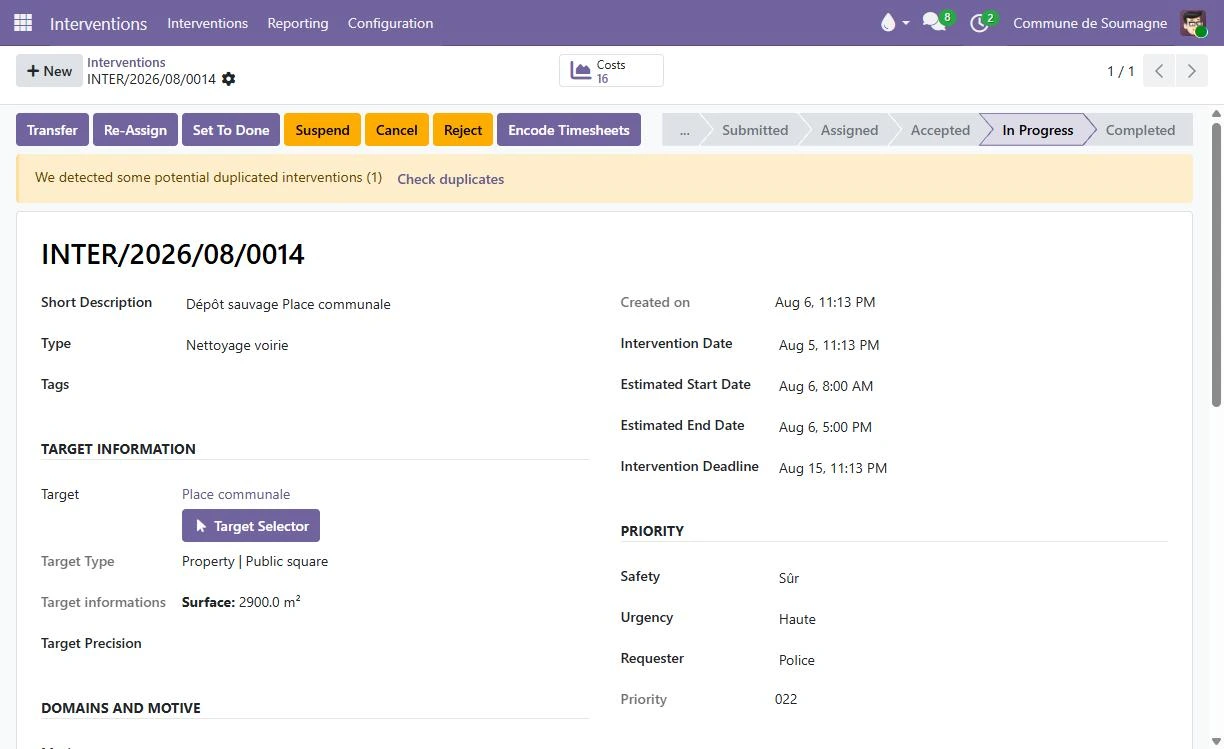
It finds its service
The classification turns into a responsible service on its own. One that still lands in the wrong place is transferred with its whole history, and the person transferring it can keep following it.
Someone is named
The service head assigns it. Safety, urgency and the requester's own priority are three separate scales, so the arbitration is explicit rather than a matter of who shouted loudest.
The crew gets what it needs
A work order prints and goes out. The tasks to tick off travel with it, and an intervention with unfinished ones cannot simply be closed.
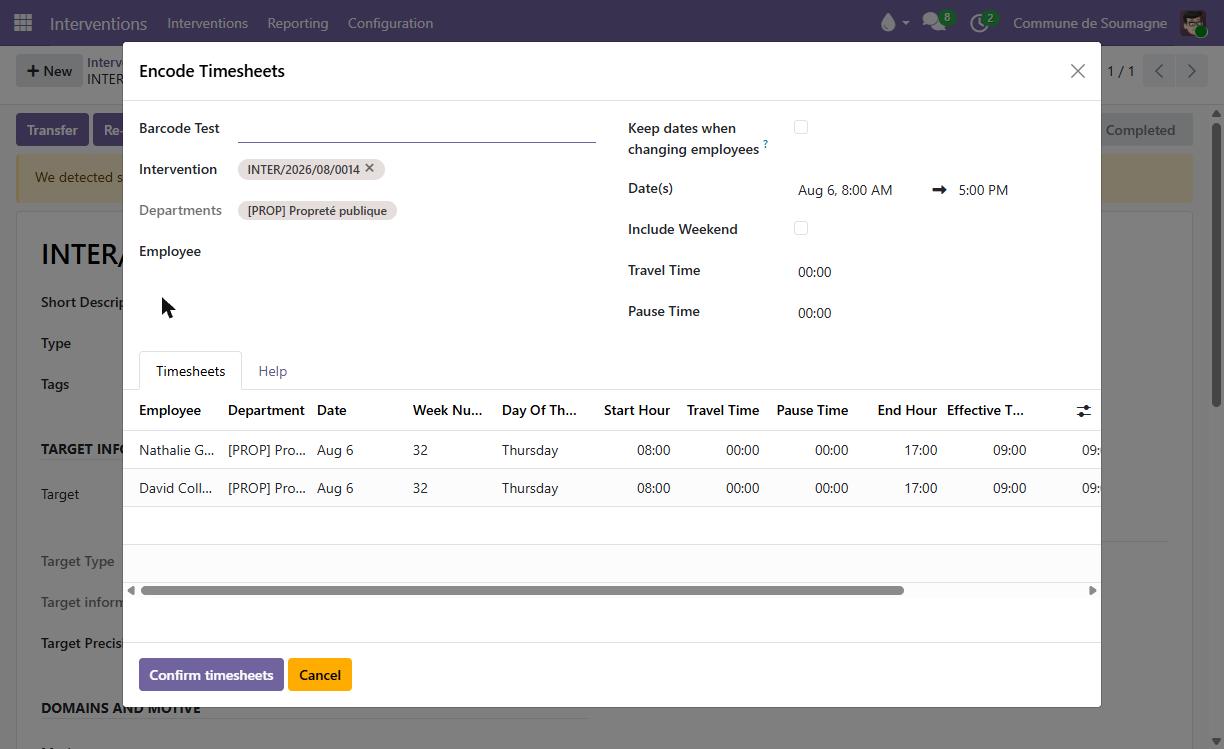
The hours go in, for the whole crew at once
Pick the agents and the days, and the entries are prepared for you, respecting each person's working schedule. Travel and breaks are separate from worked time, and an agent booked twice on the same hours is flagged before you confirm.
And the place remembers it
The request closes, and the hours and materials stay attached to the place they were spent on. A year later that square can be costed instead of estimated.
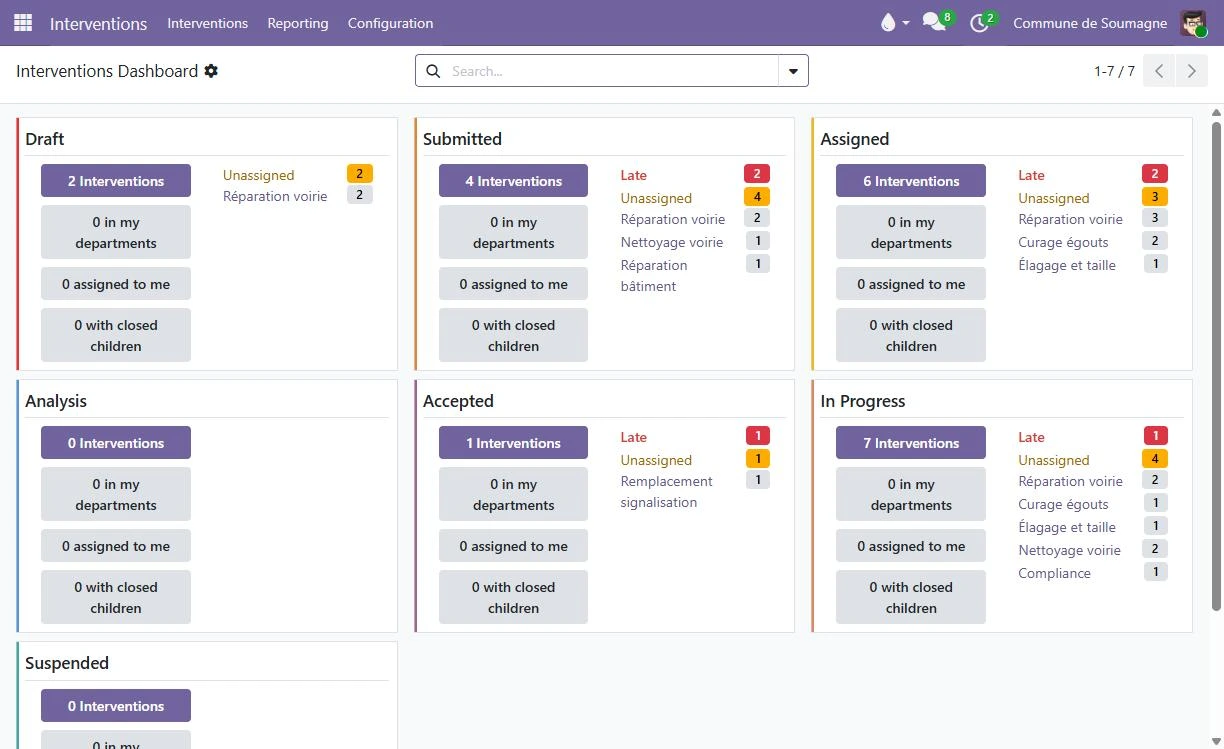
What is open, what is late, what nobody has taken
A dashboard answers the questions a coordinator asks every morning, per service and per person, with one click through to the list behind each figure.
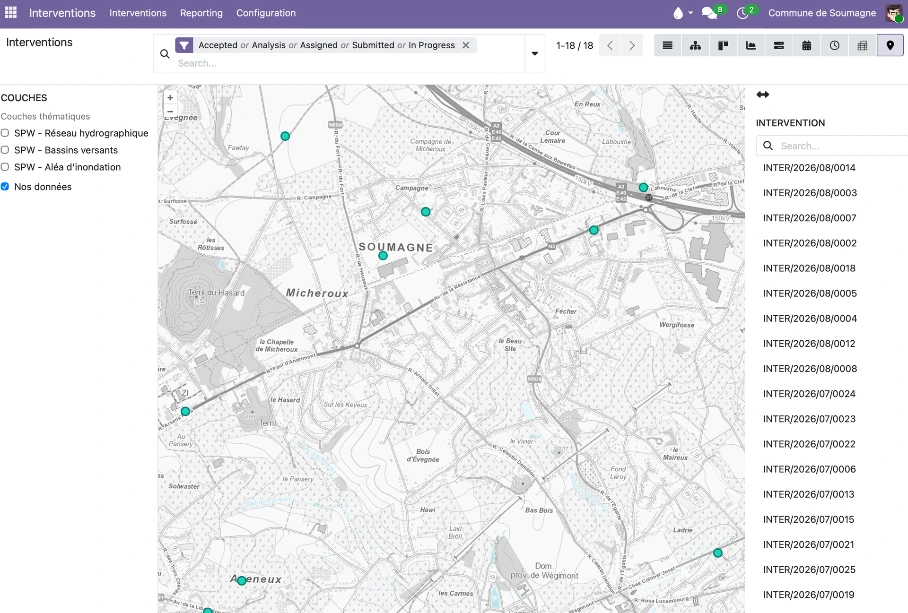
Three requests on the same corner
Open work appears on the place it concerns, because you positioned your assets once and not every request.
A list cannot show that three separate jobs sit within thirty metres of each other. A map can, and then it is a person who decides to send one crew instead of three.
Reading what came out of it
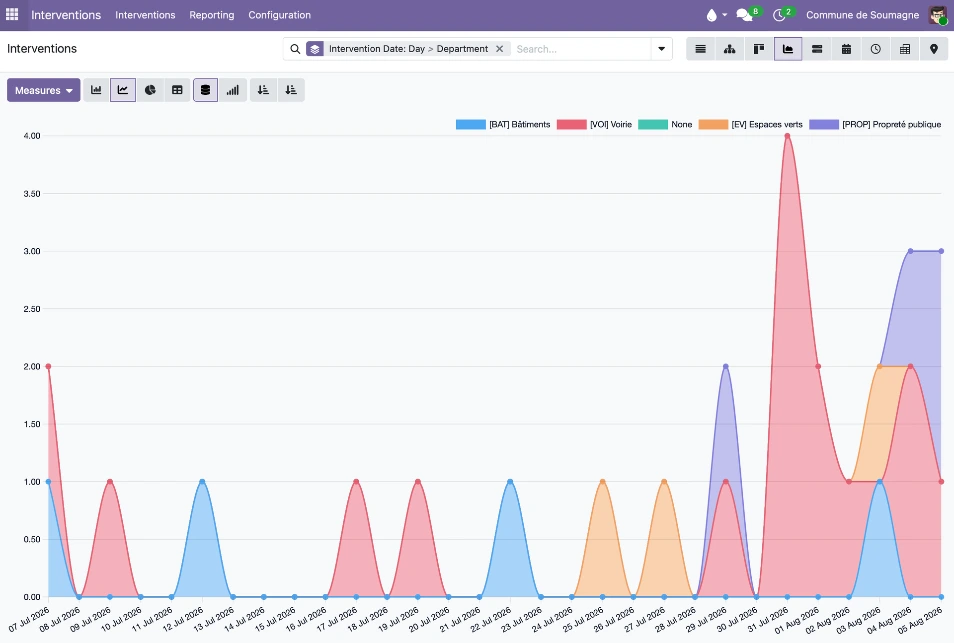
Where the work stands
Every state as a column, so a coordinator sees the whole pipeline instead of a filtered list.
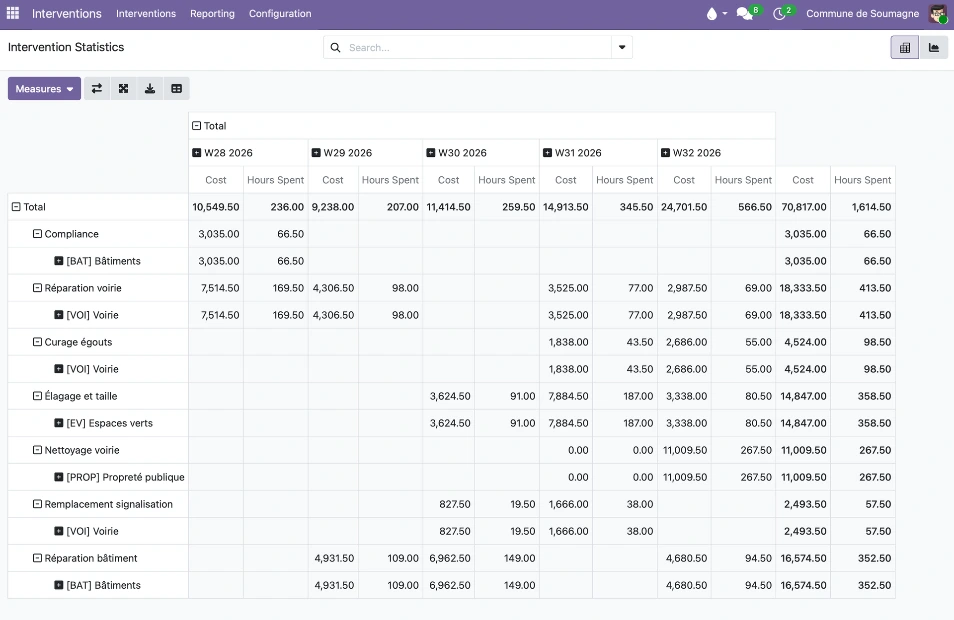
What it cost, and on what
Hours and materials by asset, by service and by month, built by whoever asks the question.
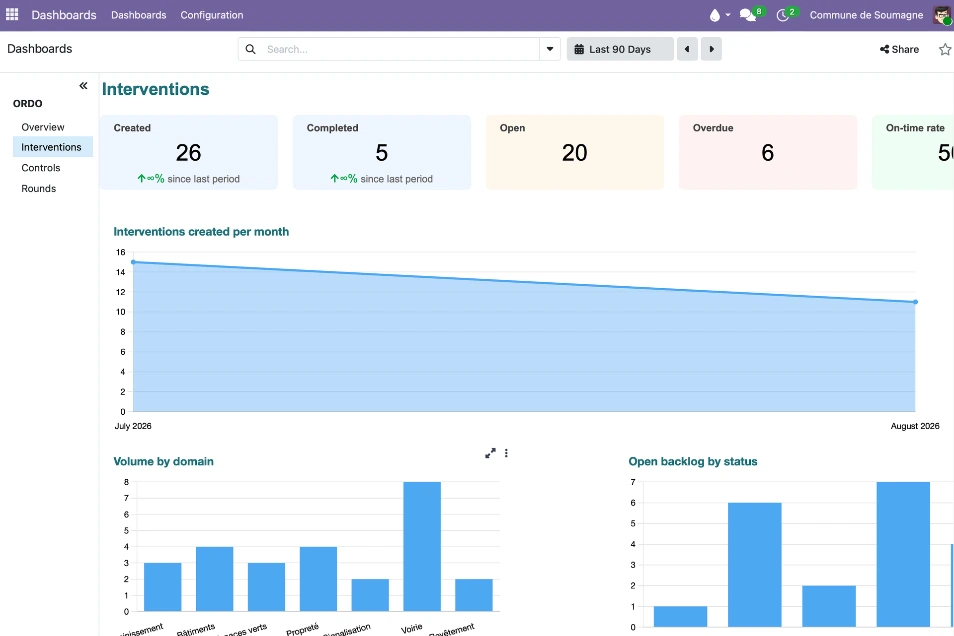
What is late, and to whom
Counters per service and per person, each one a button through to the list behind it.
The rest of what it does
One place for the work, from the first report to closure.
It reaches the right service on its own
You describe the problem and name the place. Ordo works out which service is responsible, and a request that still lands in the wrong place is transferred with its whole history.
Urgent is not one thing
A safety issue, a genuine emergency and an impatient requester are three different scales, kept separate. So a dangerous but non urgent problem can outrank a cosmetic one that somebody is shouting about.
A closed request means it was done
Work can carry a list of tasks, and a request with unticked items cannot simply be closed. What is outstanding is shown, and closing anyway is a decision rather than an oversight.
Where the work comes from, and where it goes
A request rarely stands alone.
Controls and compliance
A failed check produces the work that fixes it, and you can see whether last year's finding was ever dealt with.
Costs and analytics
The hours spent land on the place they were spent on, which is how a square ends up with a cost.
Tell us how a request reaches the right service today
Describe the path a report takes in your administration, from the call to the crew, and where it usually stalls. We will tell you what Ordo handles as it comes and what has to be described first.