
Rounds
Emptying the bins in the town centre every Tuesday. Sweeping a district every fortnight. Checking the playgrounds every month.
The circuits that come back, described once and produced on schedule, with their list of stops.
And a record of which stops were actually visited.

A resident says their street was not swept
Circuits are organised on paper or in a spreadsheet, handed to a crew in the morning, and nothing comes back about what was actually done.
So when someone complains, nobody can say whether the street was visited or not. That is the whole problem in one sentence.
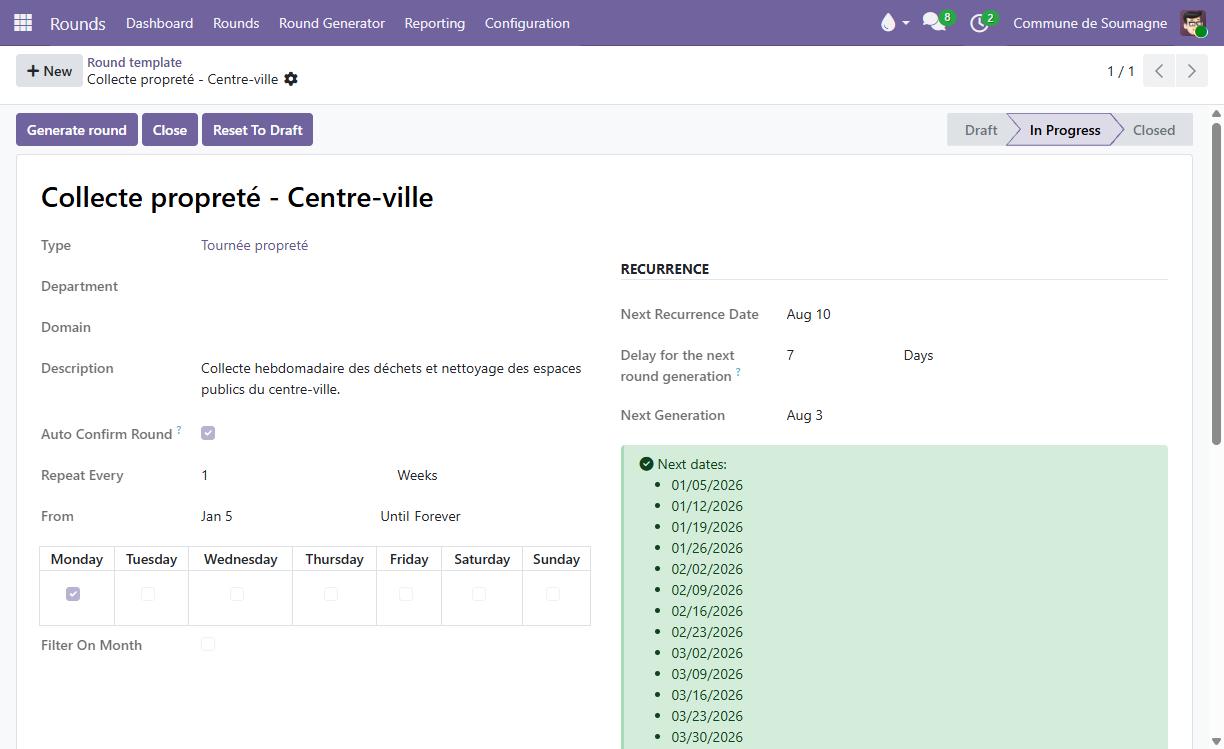
Described once, then it runs all year
Every fortnight. Tuesdays and Fridays only. The first Monday of the month. And a season, so a summer watering circuit runs from May to September and stops on its own.
The template shows the dates it would produce before a single round is generated, because a recurrence rule is easy to get subtly wrong and expensive to discover three months later.
And a closed round means something
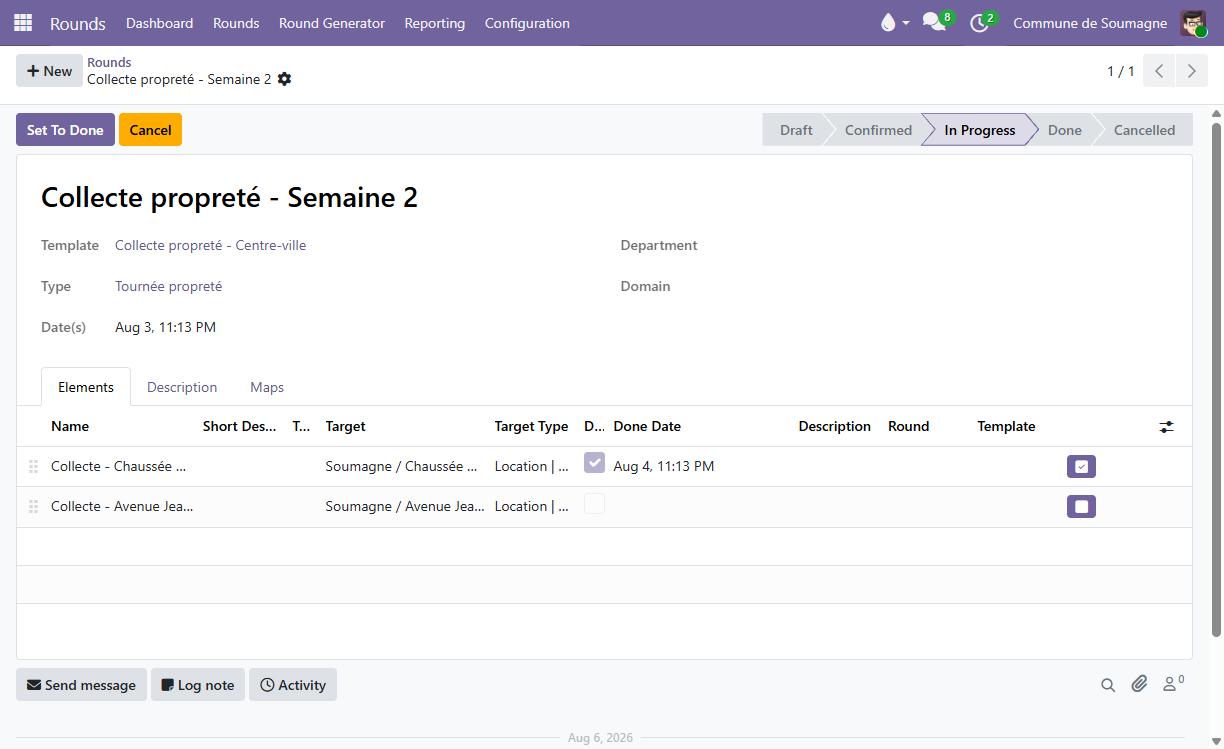
Each stop names a street, a square, a playground or a building from your inventory, so a round is work attached to places rather than a list of names in a document.
A round with unvisited stops cannot simply be closed. What is outstanding is shown and closing anyway becomes a decision. That single rule is what turns a completed round into a fact.
The rest of what it does
What a service head asks for once the circuits are running.
What is late, and what is due today
Per circuit and per family of circuits, with what is running, what is late and what is coming. Late is deliberately generous: it catches a round whose end date has passed and one still in draft while its start date has gone by.
When a stop needs real work
A damaged bin, a broken swing. The round produces a proper work request, carrying the classification and the service from its template, followed like any other.
A late start catches up
The nightly generation picks up every template that is due and repeats for any still owing, so a circuit switched on late produces what it should have rather than silently skipping.
A sheet for the crew
The round prints with its dates and its stops, to be handed out in the morning. On a map when you want it, so the circuit is seen rather than read.
What it connects to
A round is only worth recording if it reaches the place it visited.
Assets
Every stop names an asset, so a street shows the circuits passing through it and a district shows what covers it.
Interventions
What a crew finds becomes a normal request, routed and followed like the rest.
Tell us which circuits you run every week
Describe one of them, its frequency and its stops, and how you know today that it was done. We will tell you what describing it in Ordo involves and what it would give back.