
Controls and compliance
Lifts, fire extinguishers, electrical installations, playground equipment, emergency lighting.
Every periodic check you owe, scheduled from its own validity period and raised before it expires.
Certificates stop lapsing because the person who tracked them changed job.

A diary is not a compliance system
Expiry dates usually live in a wall planner, an agenda or one person's spreadsheet, and a certificate lapses because that person left or went on leave. Nobody finds out until it matters.
Findings from last year's inspection sit on a report in a drawer, with no way of telling whether they were ever dealt with.
The life of an obligation
You describe it once. Ordo keeps raising it for as long as the asset exists.
You describe the check once
A validity period and a lead time. A fire extinguisher every year, raised three months before it lapses, or whatever your rule is.
It is attached to the assets it concerns
Every extinguisher, every playground, every lift. Each one can then follow its own regime, because one installation is rarely on the same schedule as the next.
The next one appears on its own
A scheduled task creates it ahead of expiry, with the right asset, the right type and the deadline set to the current certificate. This is the difference between a catalogue of obligations and a system that reminds you.
The result is recorded in one screen
The verdict, the actual date, the inspecting body. You name your own outcomes, compliant, compliant with remarks, not compliant, and Ordo knows which of them count as a pass.
What was left open comes back
The remarks still open from last time are copied onto this inspection, each one still linked to the original. Tick the copy as done and the original closes too.
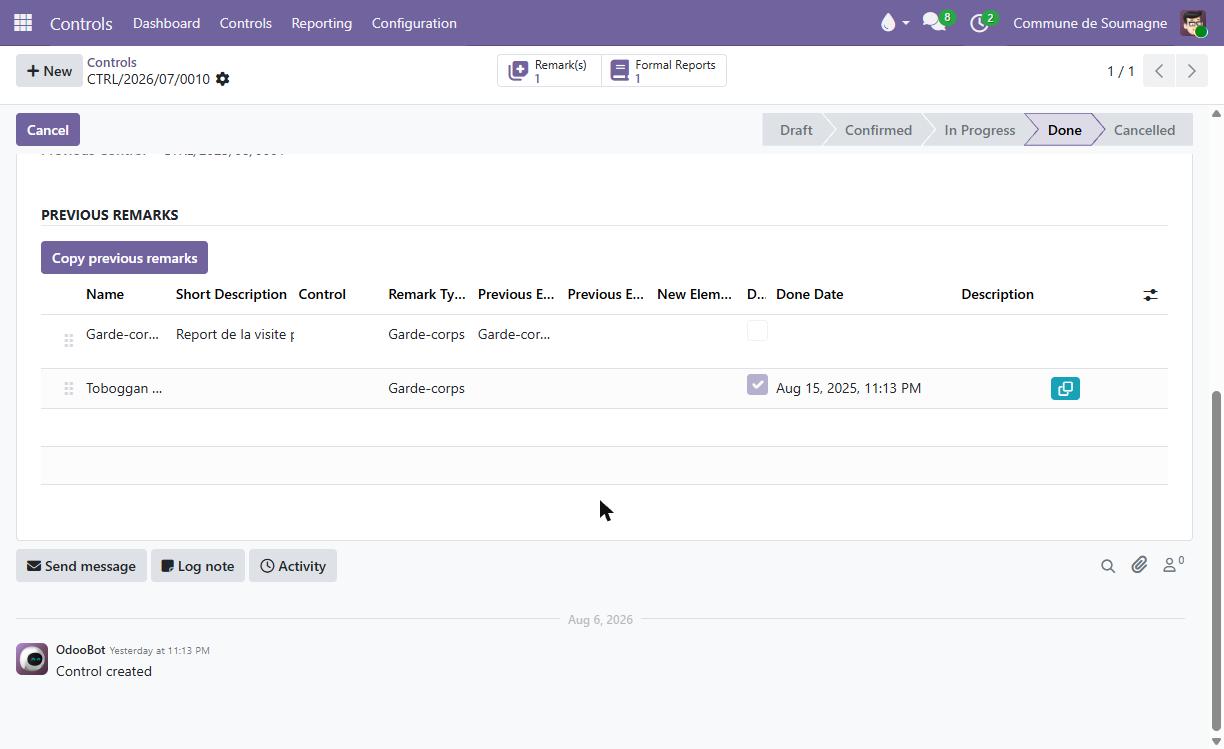
A failure produces the work that fixes it
The inspection generates the request, and an individual remark can generate its own. The repair is then routed, assigned and costed like any other work.
And the next date is already set
The new expiry is computed from the date of the inspection, the next generation date follows, and the cycle starts again without anyone maintaining a calendar.
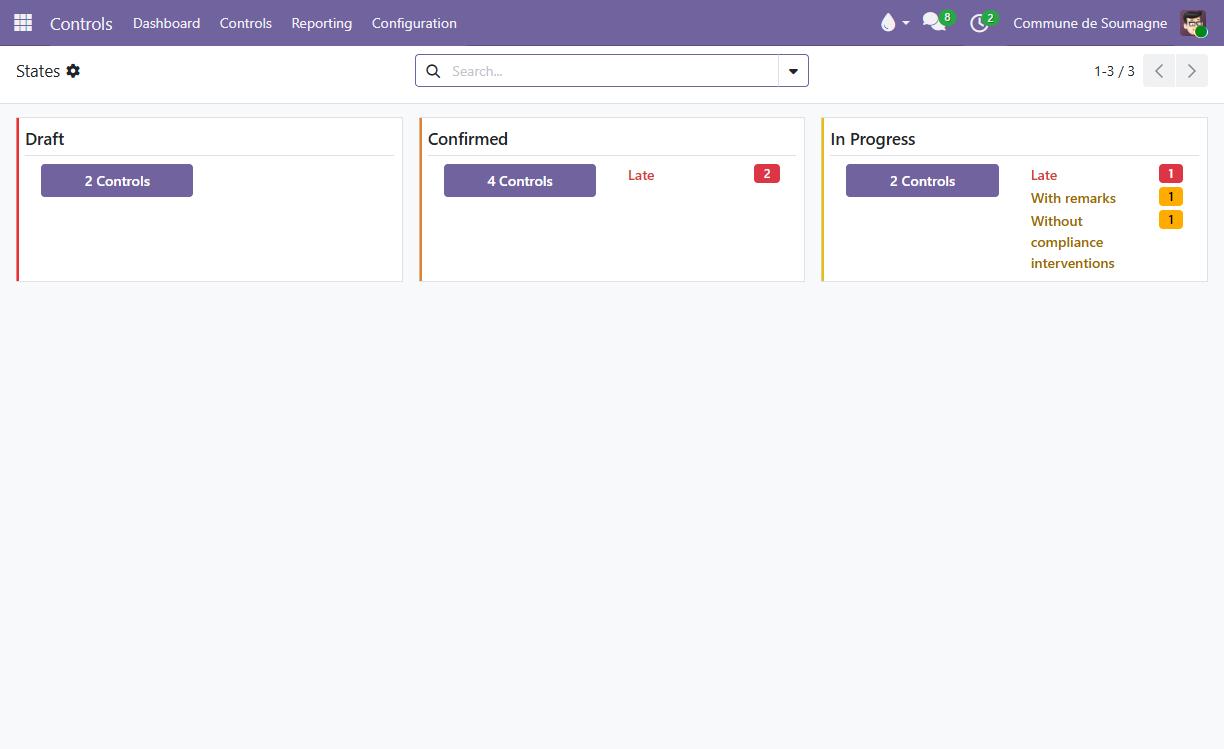
What an inspection manager watches
Late, due today, still to come, and how many inspections carry remarks that nobody has closed. Each figure is a button through to the list behind it.
The rest of what it does
Three things that come up in every project once the catalogue is running.
A morning's visit, in one pass
An inspection body covering twelve installations in one morning is handled as one batch, with its findings gathered together and its results recorded in a single go.
Something to hand to your contractor
The outstanding findings export as a spreadsheet, with what was observed and whether it was closed. It is usually the first thing asked for once the checks are running.
Nothing that has run is deleted
A rule that has already produced inspections cannot be removed, only archived. Future generation stops, everything already recorded stays.
What it touches
Compliance is only useful when it reaches the rest of the work.
Assets
Each asset carries the checks it owes, their expiry dates and everything already carried out on it.
Interventions
Compliance work is a normal request: routed, assigned, carried out and costed like any other.
Costs and analytics
The hours spent on checks and on the repairs they trigger land on the asset like everything else.
Tell us which checks you owe, and how you track them today
Name the families of installations you are responsible for and where their expiry dates currently live. We will tell you what setting up the catalogue involves and what it would start reminding you of.