
Finance and accounting
When you are fairly sure the figures are right, but proving it takes a week.
From the first quotation to the annual accounts, and every step in between.
Built to hold up when a reviewer, an administration or a bank asks how a figure was arrived at.

Your entire financial flow, covered
Each step below is part of the work we take on.
None of it is left to another software, or to a spreadsheet.
A sale or a purchase
A quotation goes out, or an order is placed. Nothing has reached the accounts yet, and everything that follows depends on getting it right here.
The invoice
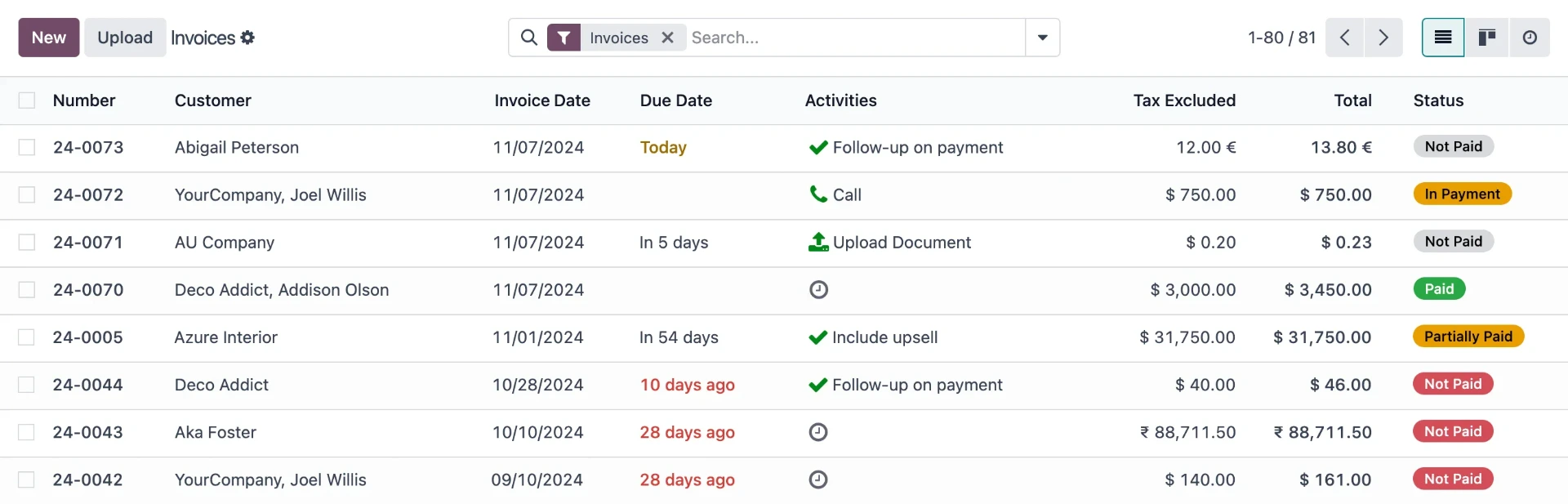
Issued or received, electronic where the law now requires it, recorded once, and carrying the payment reference your customer will quote when they settle it.
Approval
A supplier invoice cannot be paid before someone has approved it, and the same invoice cannot be recorded twice. The system refuses, rather than warning you afterwards.
Payment
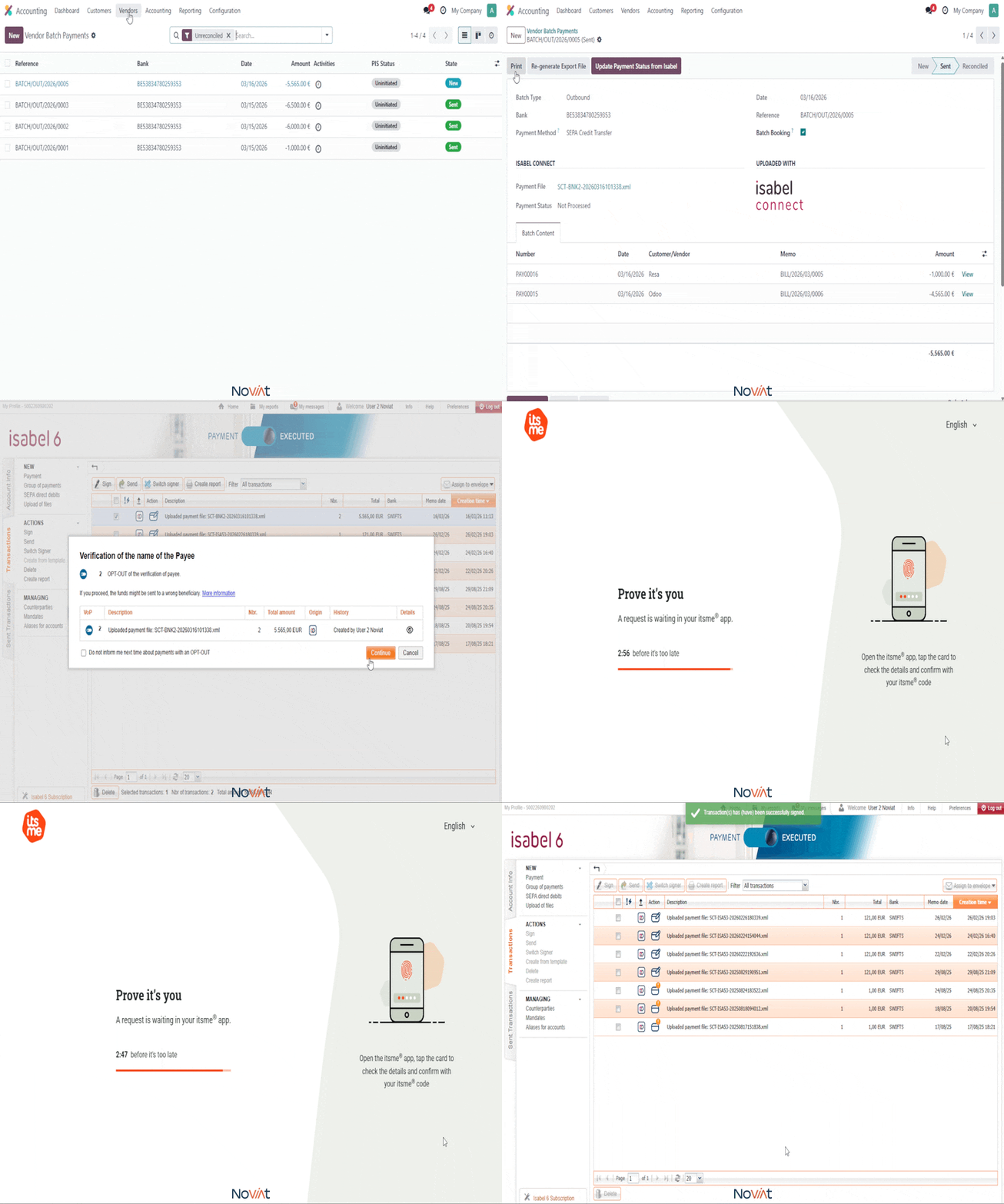
Payment orders prepared once and sent straight to the bank. Signing stays with the bank and its own security, never with the accounting system.
The bank statement
Arrives on its own each morning and is read in full, rather than reduced to a date, an amount and a label. What kind of movement it was, the reference the payer used, who the counterparty was, and anything your bank added.
Reconciliation
Most transactions find their invoice on their own, through a series of checks that get stricter as they go. What reaches a person is what needed judgement all along.
The general ledger
Fixed assets and depreciation, accruals and deferrals, allocation to cost centres and projects, and every entry still connected to the document and the bank line that produced it.
VAT, the close and the annual accounts
The periodic VAT return, the monthly close, consolidation across companies, and the annual accounts. In October, a question about a March figure takes an afternoon.
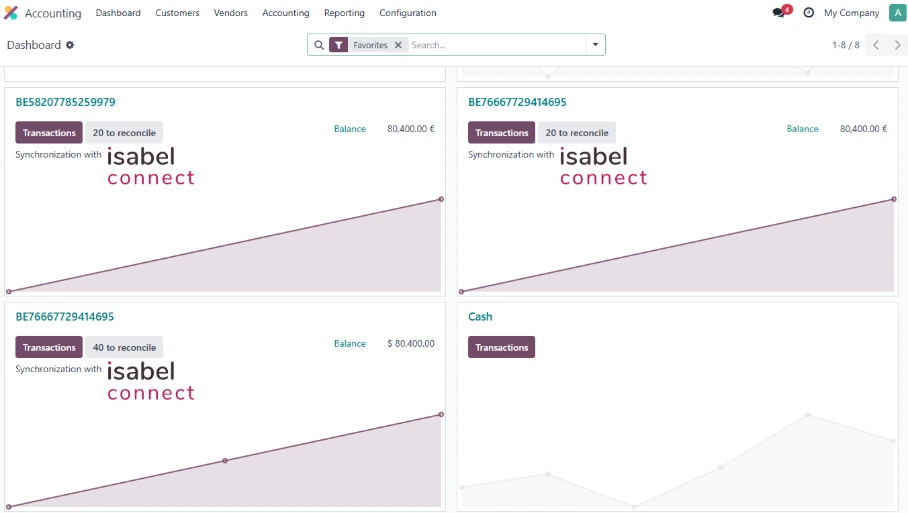
Every morning there are statements to bring in and payments to match.
Every month there is a close, which is largely the work of finding out why two numbers disagree.
Once a year there are annual accounts, and often someone from outside asking how a figure was arrived at.
The judgement is in what you do with the numbers once you trust them.
The rest is a chain, and it only works if no link is missing.
What we brought to it ourselves
Much of the chain above is configuration. These six are ours, built because clients needed them and the standard stopped short.
Isabel Connect
Statements come down from Isabel into Odoo on their own, and payment orders go up the same way. Signing stays inside Isabel, with your usual strong authentication. No signature is ever held in Odoo.
EBICS
The European standard for talking to a bank without a human in the middle. Your bank exposes an access point, Odoo authenticates with your own keys, and files move machine to machine. Several people can approve a payment from their phone.
Discover EBICS →Bank files read in full
A Belgian bank file carries far more than a date, an amount and a label. What kind of movement it was, the reference the payer used, who the counterparty was and your bank’s own messages are all kept, which is precisely what makes the matching work.
Payments that cannot slip through
An invoice cannot be recorded twice, cannot be paid before someone approved it, and cannot be slipped unapproved into a batch of payments. The batch itself warns you when a payment looks like one already made.
An audit trail you can follow
A bank entry can be numbered after the statement it came from, so the entry and the statement line are visibly the same thing. Answering an auditor stops being an exercise in reconstruction.
Group figures without local charts
Companies in a group rarely share a chart of accounts. Ours lets an accountant who knows the group chart post in any subsidiary without learning its local one, and consolidated reporting follows.
Most of it is decided before it reaches accounting
What lands in your accounts was settled earlier, by someone selling, buying or building. That is why we work on those too.
Logistics and manufacturing
What was sold, what was built and what left the warehouse, valued correctly and posted once.
Logistics and manufacturing
Project and site-based business
Where a job stands while it is still running: sold, bought, spent and billed, side by side.
Project and site-based business
Tell us how your month-end runs today
Describe what your finance team does by hand and what you would like it to stop doing. We will tell you what Odoo handles as it comes, what needs configuring, and the few things that genuinely need building.