
Ordo
What does your administration look after, and what is happening to it?
Ordo manages public assets and the work carried out on them: what you own, what you maintain, what you are required to inspect, and what all of it costs.
Built by Noviat for Belgian public administrations, on Odoo.

The answer exists. It is in six different places.
Each service keeps its own inventory in its own spreadsheet, so nobody can say what a whole school contains or who looks after a given square. Requests arrive by phone, by email and on paper, and are routed by whoever happens to know who handles what.
Inspection deadlines sit in a diary. Rounds are organised on paper, with nothing recorded about which stops were actually made. And the works department knows its annual budget without being able to say what one building consumed.
What you can manage in it
One description of everything the administration is responsible for, shared by every service instead of rebuilt by each one.
Public space
Districts, streets, squares, addresses. The ground you are responsible for, described once and used by everyone.
Buildings
Schools, sports halls, technical depots, administrative buildings, down to a floor or a single room.
Equipment
Playground equipment, lifts, fire extinguishers, road signs, heating installations, machines, and where each one is installed.
Vehicles
The fleet alongside the rest, so a vehicle is followed like anything else you own.
The work carried out
Requests, inspections and recurring rounds, each attached to the place or the equipment it concerned.
What it costs
Hours and materials recorded against what they were spent on, service by service and asset by asset.
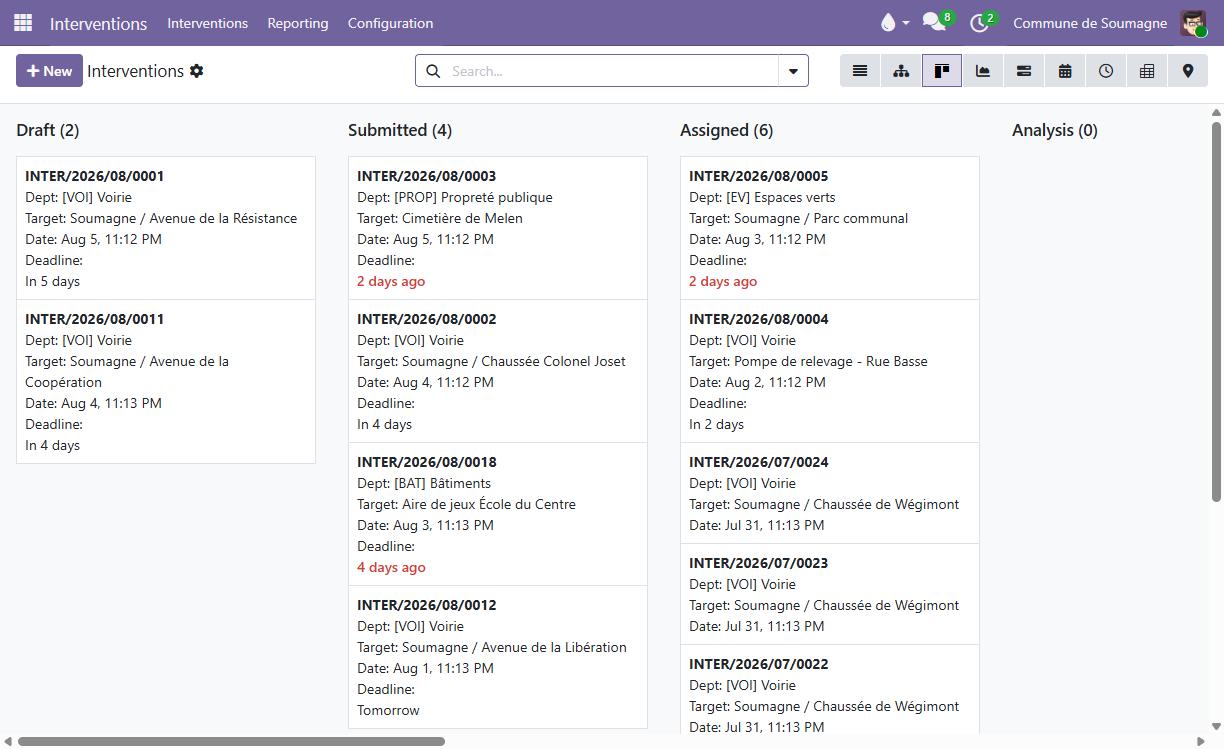
The work in progress, as a coordinator needs to see it
Every stage as a column, what is late in red, and the service on each card. Not a report produced on request, the screen the team works in.
What it changes
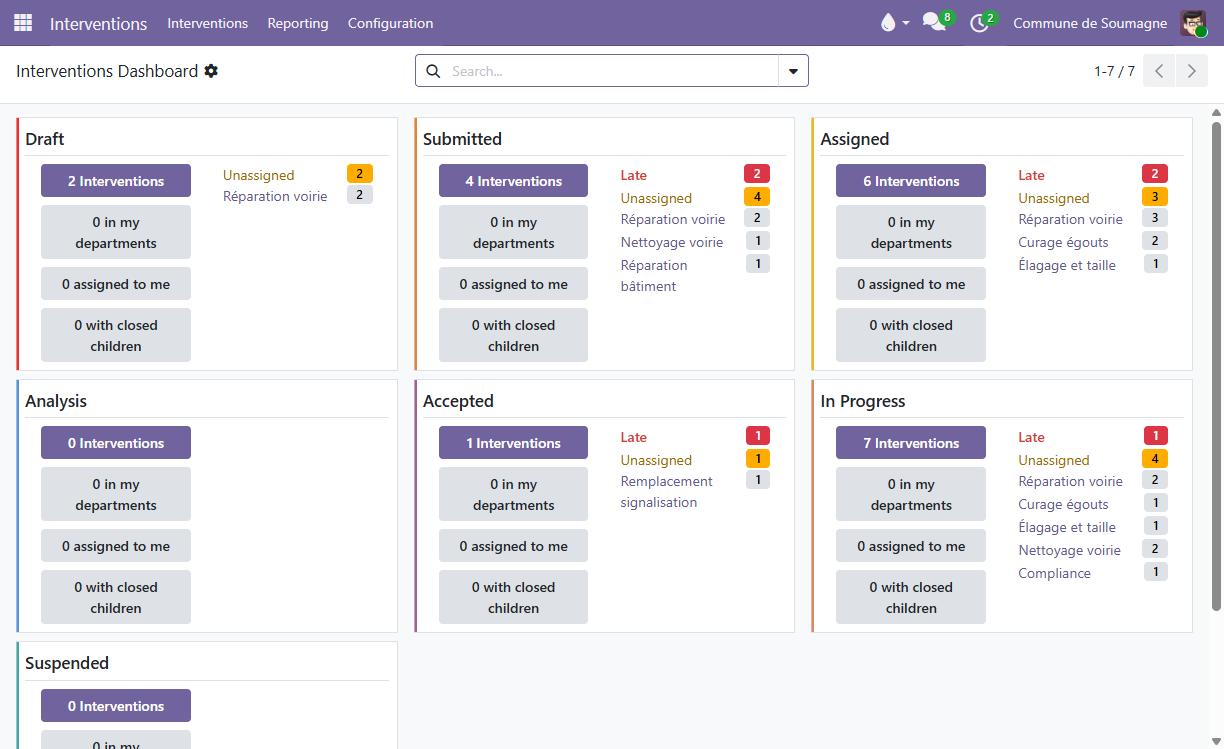
Not a database. A different answer to six questions that come up every week.
One inventory, every service
Roads, buildings and schools all work from the same list, each maintaining its own part of it. Nobody rebuilds a spreadsheet to answer a question.
A request reaches the right service on its own
Whoever takes the call describes the problem and names the place. Ordo works out who handles it. Nothing waits on a corridor conversation.
Nothing falls due unnoticed
Every periodic inspection you owe is scheduled from its own validity period and appears before it expires. Certificates stop lapsing because the person who tracked them changed job.
Proof that the work was done
A round or a request closes only when its stops and its tasks are ticked off. When a resident says their street was not swept, there is an answer.
What a building actually cost
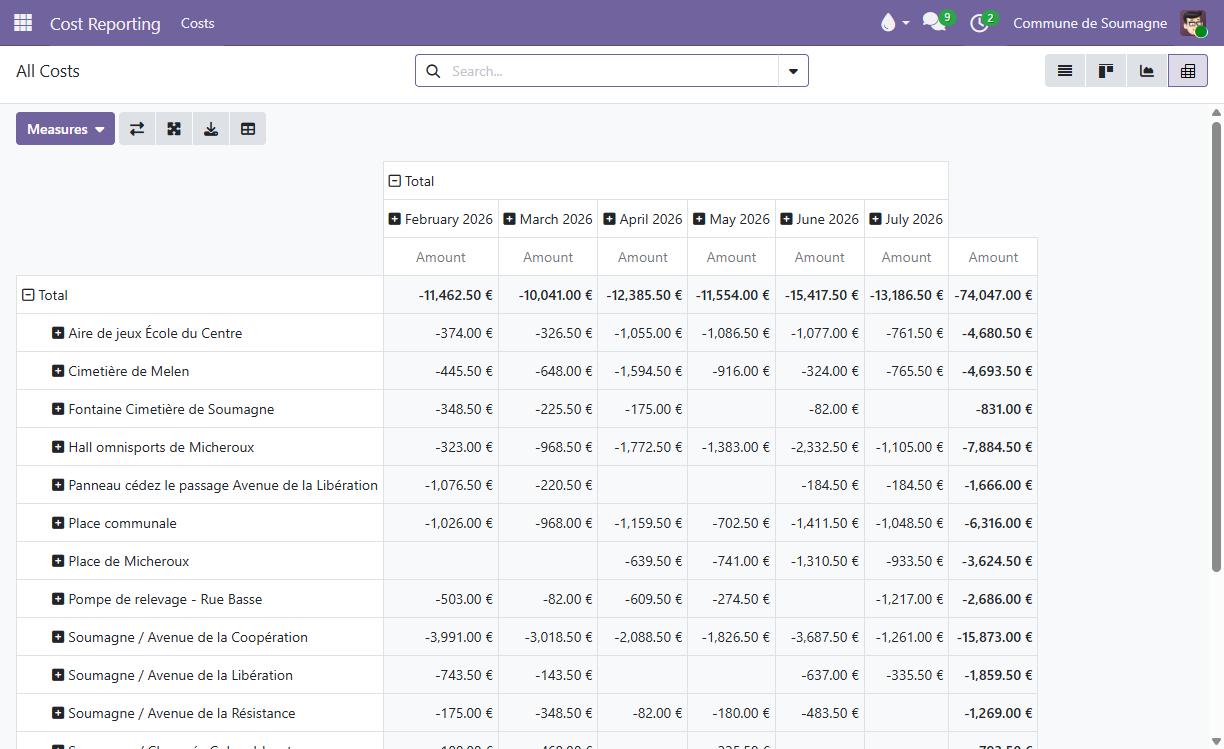
Because hours and materials name what they were spent on, a school, a square or a district can be costed over three years instead of estimated from memory.
It grows with you
Start with the inventory alone. Add work management a year later and inspections the year after. Each part builds on what is already recorded rather than replacing it.
A resident reports a broken bench
a year later the park can be costed
A bench in the park
An agent records the request and names the park. Ordo routes it to the service in charge, the team leader assigns it, the agent does the work, and the hours are recorded against it. A year later the park has its own screen: the requests it generated, the inspections carried out on its equipment, the rounds that passed through it, and what all of that cost.
Six areas, installable one at a time
A first project can be small. The inventory does not require work management, and work management does not require inspections.
Assets
Public space, buildings, equipment and vehicles, organised the way your administration actually is.
Interventions
From the first report to closure, with the hours and materials recorded against the thing worked on.
Controls and compliance
The periodic checks you are required to carry out, scheduled and raised before they expire.
Rounds
Emptying bins, sweeping a district, checking playgrounds, and a record of which visits happened.
Costs and analytics
What a square, a school or a service consumed, over a month or over three years.
Mapping
Your territory on a map, with addresses and coordinates from the official Belgian registers.
How it is delivered
Ordo runs on Odoo and is organised as one application per subject, each installable on its own, which is what makes a first project small.
It runs in French, Dutch and English, following each user's own setting, and so does the documentation inside the application.
It is strictly internal: it serves your own staff, and there is no citizen portal. That is a decision about what the product is for.
We deliver the implementation ourselves: workshops to describe how you are organised, loading your existing inventory from your own spreadsheets, configuration, training, then maintenance and support. We host and operate the servers.
Tell us what your administration looks after today
Describe how your services are organised and where the answers currently live: which spreadsheet, which cabinet, whose diary. We will tell you what a first step would look like and what it would leave for later.